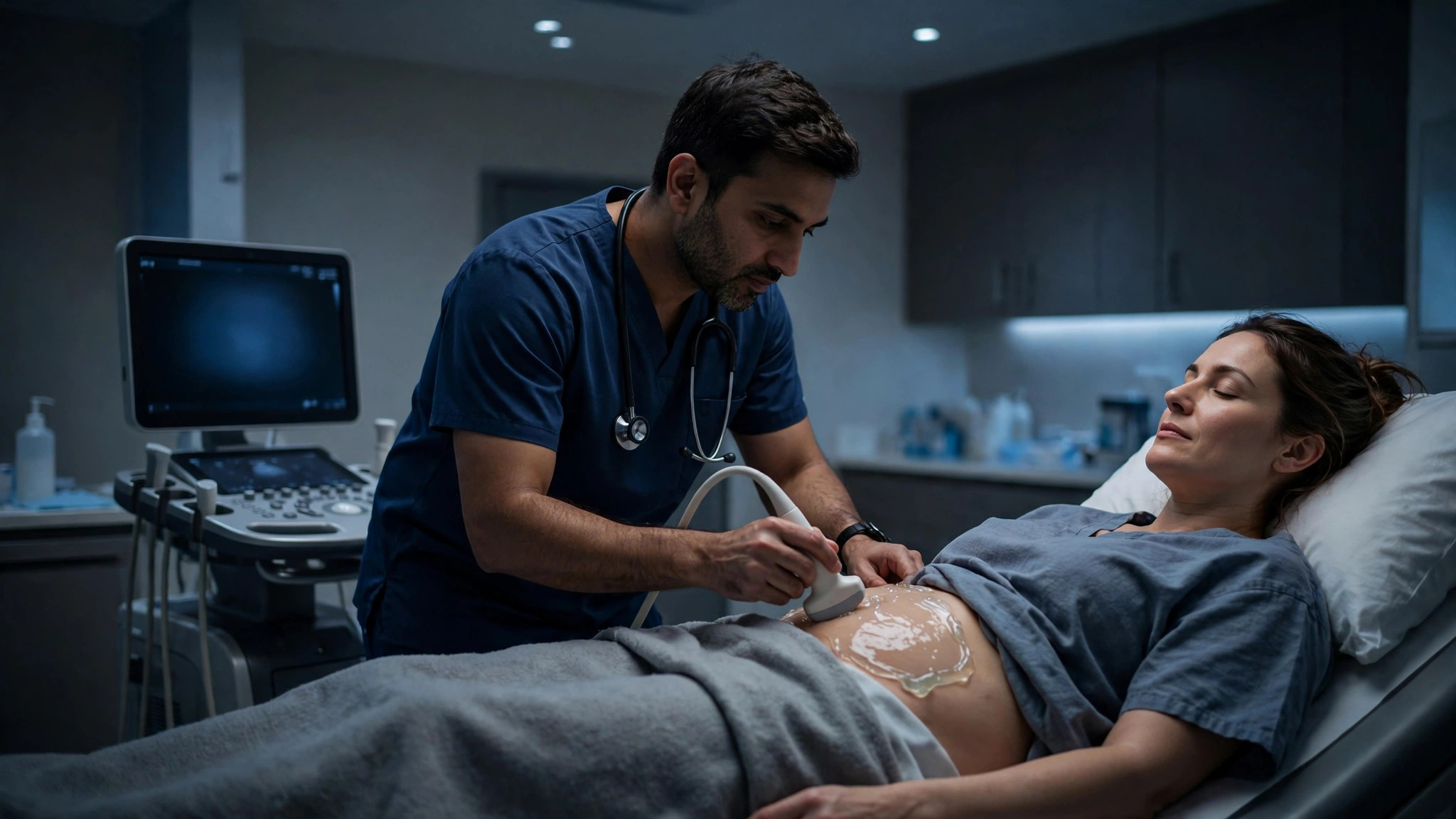
An ultrasound is an imaging scan, not a blood test. It uses sound waves to build a live picture of organs, tissues and, in pregnancy, the baby. There is no blood sample and no radiation involved in a standard ultrasound. Because different scans look at different parts of the body, there is no single ultrasound price: the price depends on the exact scan your doctor has written on the prescription.
This comparison brings together the common ultrasound scans priced by the major labs on this site. All prices are in Pakistani Rupees (PKR) and are taken from each lab’s own price list page on alllabtests.com, as explained under the table. Where a lab does not list a scan, the table shows a dash rather than a guess.
Ultrasound prices compared
| Scan | Dow (DDRRL) | IDC | Chughtai | Alnoor |
|---|---|---|---|---|
| Ultrasound Abdomen | 2,300 | 2,800 | 3,000 | — |
| Abdomen & Pelvis | — | 3,200 | 3,500 | — |
| Pelvis | 1,300 | 2,800 | 3,000 | — |
| Pregnancy / Obstetric | — | 3,000 | 3,000 | — |
| Transvaginal (TVS) | 1,500 | 3,200 | 4,000 | — |
| KUB | 1,600 | 2,800 | 3,000 | — |
| Scrotum | 1,300 | 3,800 | 3,500 | — |
| Breast (one side) | 1,200 | 2,800 | 3,000 | 2,500 |
| Thyroid / Neck | 1,300 | 3,200 | 5,000 | 4,500 |
| Renal Doppler | 3,800 | 4,800 | 6,000 | — |
| Carotid Doppler | 4,700 | 4,500 | 10,000 | — |
| Foetal / Fetal Doppler | 2,500 | 4,800 | 4,500* | — |
* Chughtai’s figure is for its third-trimester scan with fetal Doppler and biophysical profile (BPP) together, as listed, not a standalone fetal Doppler study.
How to read the table: named variants kept separate
Scan names are not interchangeable, so variants that are listed separately have not been merged into one row.
- Dow: Abdomen is shown as Abdomen (Whole) at Rs. 2,300. Dow also lists Abdomen (Upper) at Rs. 1,600 and Abdomen (Lower or Pelvis) at Rs. 1,600 as separate entries. Pelvis is Rs. 1,300, and Transvaginal is listed as Pelvis (Transvaginal) at Rs. 1,500. Scrotum is listed as Testes at Rs. 1,300. Breast is Unilateral (one side) Rs. 1,200 and Bilateral (both sides) Rs. 1,600. Thyroid/Neck is listed as Neck (Thyroid, Para Thyroid, Lymph Nodes) at Rs. 1,300. Renal Doppler is listed as Doppler Renal Vessels at Rs. 3,800 and Carotid Doppler as Doppler Carotid Bilateral at Rs. 4,700.
- IDC: Scrotum is Rs. 3,800; IDC also lists Scrotum/Testicle separately at Rs. 4,200, so the two entries are not combined. Thyroid is Rs. 3,200 and Neck is also listed at Rs. 3,200. Carotid Doppler is listed as Doppler Carotid Bilateral at Rs. 4,500. IDC lists Early Pregnancy/NT Scan at Rs. 2,800, but it is not in the main table because no other lab lists a scan named NT in the same way: Dow lists Foetal Anomaly at Rs. 2,300 and Chughtai lists a second-trimester scan with anomaly at Rs. 3,500. Those related pregnancy scans are named here for reference and are not treated as the same scan.
- Chughtai: Pregnancy is shown as the first-trimester obstetrical scan at Rs. 3,000. Chughtai also lists a second-trimester scan with anomaly at Rs. 3,500 and a third-trimester scan with fetal Doppler and BPP at Rs. 4,500. Breast is Single at Rs. 3,000 and Both at Rs. 6,000. Thyroid is Rs. 5,000; Neck (General) is listed separately at Rs. 4,000. Scrotal (Non-Doppler) is Rs. 3,500; Scrotal Doppler is listed separately at Rs. 6,000.
- Alnoor: Only two common rows are priced by Alnoor: Breast (Left Breast) at Rs. 2,500 and Thyroid at Rs. 4,500. Alnoor also lists Musculoskeletal ultrasound at Rs. 4,500, Trans-rectal (TRUS) at Rs. 5,500, Biophysical Profile at Rs. 4,000 and Color Doppler of both lower extremities at Rs. 13,000, but those are single-lab entries and are not in the comparison table.
Sources and gaps
Sources. Dow prices are from the Dow lab list page on alllabtests.com, in its imaging/radiology section (cross-checked against the site’s Dow ultrasound post, which carries the same Dow ultrasound entries). IDC prices are from the IDC imaging list page on alllabtests.com; note that IDC’s own official site publishes test names and codes without prices, so IDC figures here are the site’s IDC list-page prices, not official IDC prices. Chughtai prices are from the Chughtai list page on alllabtests.com. Chughtai’s own official ultrasound page was checked and publishes only general market price ranges, with exact prices to be confirmed by phone, so it does not confirm the individual Chughtai figures in this table. Alnoor prices are from the Alnoor list page on alllabtests.com.
Gaps — labs with no matching entry. Dr. Essa, Ibn-E-Sina and Khan Lab have no diagnostic ultrasound scans in their alllabtests.com list pages checked for this post, so they have no column in the table. Dr. Essa’s list includes ultrasound-guided procedures (for example, ultrasound-guided FNAC and biopsy), but not the diagnostic scans compared here. Aga Khan publishes no individual ultrasound prices in the same way, so no Aga Khan figure is shown: confirm the price with the hospital directly.
Prices can change and can differ by branch and by the exact study requested, so confirm the price for the exact scan name on your prescription before you go.
What the common scans look at, in plain words
Abdomen: organs in the upper abdomen such as the liver, gallbladder, pancreas and spleen. Abdomen and pelvis: a wider view covering the abdomen together with the pelvic organs. Pelvis: the bladder and the reproductive organs in the lower abdomen. Pregnancy / obstetric: the pregnancy itself, including the baby’s growth and position, as advised at different stages of pregnancy. TVS (transvaginal): an internal pelvic scan that gives a closer view of the uterus and ovaries. KUB: the kidneys, ureters and bladder. Scrotum: the testes and surrounding structures. Breast: breast tissue, often used alongside other breast imaging when advised. Thyroid / neck: the thyroid gland and nearby structures in the neck. Doppler scans: blood flow, rather than structure alone — for example, blood flow in the kidneys (renal Doppler), in the neck arteries (carotid Doppler) or to the baby in pregnancy (fetal Doppler).
Preparation: general points only
Preparation depends on the scan. Labs commonly ask for a full bladder for pelvic scans, because a full bladder can make pelvic organs easier to see, and fasting is sometimes asked for before an abdomen scan. These are general points only, not a rule for every scan — for example, TVS is usually different from an external pelvic scan — so always follow the instructions given by your own lab for your exact scan. If no preparation instruction was given, ask the lab before the appointment rather than assuming one.
Who performs and reports a scan
In general terms, ultrasound scans are performed by trained sonographers or sonologists and reported by a radiologist or sonologist — the doctor who specialises in medical imaging. The report is the written result that goes back to the doctor who requested the scan. This post does not name any individual lab’s staff.
How to choose, without overpaying for the wrong scan
Start from the exact scan name on your prescription and compare that same scan across labs, not a similarly named one. Check whether the price is for one side or both sides (this matters for breast and some Doppler studies), whether a pregnancy price is for a routine scan or a bundled detailed scan, and whether the centre near you actually performs that study. A lower price for a different scan is not a saving. Prices also vary by scan type and by machine and detail involved, so a Doppler or detailed pregnancy scan will normally cost more than a routine abdomen or pelvis scan.
Reports
Ultrasound reports are normally given as a written imaging report, and many labs also let patients view reports online. The following pages on this site were live at the time of writing and explain each lab’s report route:
- Dow lab list and report information
- IDC list and report information
- Chughtai list and report information
- Alnoor list and report information
- Chughtai Lab official ultrasound services page
No report timing is stated in this post, because timings were not verified for each lab and they vary by centre and study.
FAQs
Is an ultrasound a blood test? No. An ultrasound is an imaging scan that uses sound waves. No blood sample is taken for the scan itself.
Why does the same lab charge different prices for different ultrasounds? Because the scans are different studies. A routine abdomen scan, a detailed pregnancy scan and a Doppler study take different amounts of time, detail and equipment, so they are priced differently.
What is the difference between an abdomen scan and an abdomen and pelvis scan? An abdomen scan focuses on the upper abdominal organs, while an abdomen and pelvis scan covers a wider area including the pelvic organs. They are listed separately by the labs and are priced separately in the table above.
Do I need a full bladder or fasting for every ultrasound? No. Labs commonly ask for a full bladder for pelvic scans and sometimes ask for fasting before an abdomen scan, but the instruction depends on the scan. Follow your own lab’s instructions for your exact scan.
Why is a lab shown as a dash for a scan? A dash means that scan was not found in that lab’s list page checked for this post. It does not mean the lab never performs that scan — it means no price for it could be verified from the lab’s list, so none is shown.
Independence and disclaimer
This post is an independent price comparison. It is not sponsored by, or affiliated with, Dow, IDC, Chughtai or Alnoor, and no lab paid for placement in the table. Prices are general information only, taken from the sources named above, and are not medical advice. Always follow your doctor’s advice about which scan you need, and confirm the price and preparation with the lab before your appointment.
Last updated: November 2026