
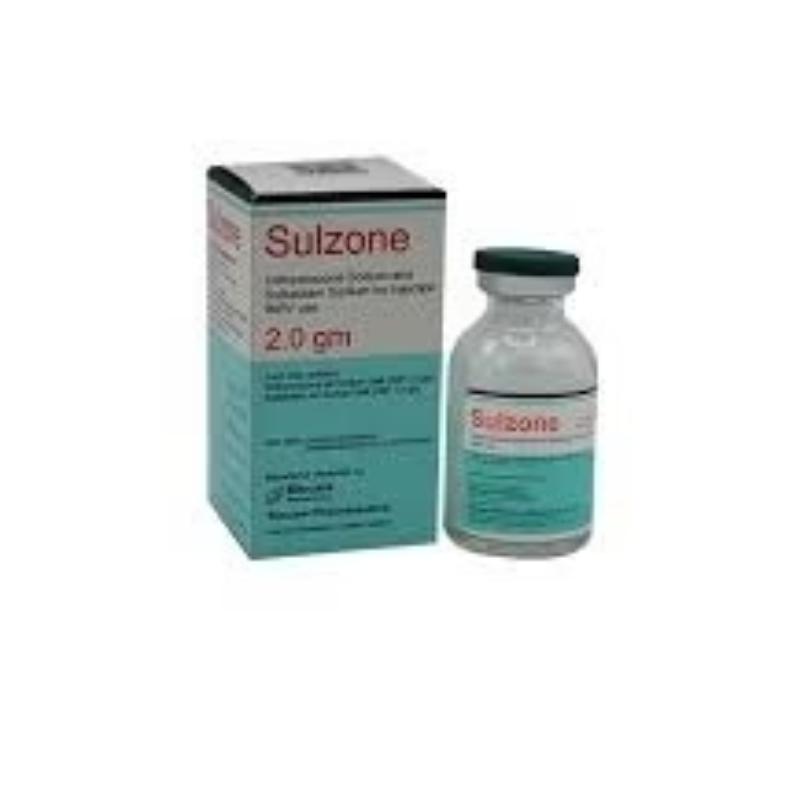
Sulzone injection is a prescription antibiotic used for treating serious bacterial infections in hospitals and clinical settings. It contains a combination of powerful antibacterial agents that help fight a wide range of infections affecting different parts of the body. Doctors commonly recommend it for patients who require fast and effective treatment for moderate to severe bacterial conditions.
This injection is widely used in Pakistan for respiratory infections, urinary tract infections, skin infections, and other serious bacterial diseases where oral antibiotics may not be enough.
Composition / Ingredients
Sulzone injection contains a combination of two important antibiotics:
Cefoperazone
Cefoperazone is a third-generation cephalosporin antibiotic. It works by stopping bacteria from forming their protective cell wall. Without a proper cell wall, bacteria cannot survive and eventually die, helping the body clear infection quickly.
Sulbactam
Sulbactam is a beta-lactamase inhibitor. Some bacteria produce enzymes called beta-lactamases that destroy antibiotics and make them ineffective. Sulbactam blocks these enzymes, allowing cefoperazone to work more effectively against resistant bacteria.
Benefits of this combination
- Broad-spectrum antibacterial coverage
- Effective against resistant bacterial strains
- Suitable for severe infections
- Faster recovery when used correctly under medical supervision
This combination makes sulzone injection a strong choice for treating infections that do not respond to basic antibiotics.
How It Works
Sulzone injection works through a dual-action mechanism that targets harmful bacteria in the body.
Cefoperazone interferes with the bacterial cell wall formation. Bacteria need a strong cell wall to survive and multiply. When cefoperazone blocks this process, bacteria weaken and die. This helps stop the spread of infection in the body.
Sulbactam enhances the effect by blocking enzymes produced by resistant bacteria. These enzymes normally destroy antibiotics before they can work. By inhibiting them, sulbactam protects cefoperazone and allows it to kill bacteria effectively.
Overall effects on the body
- Stops growth and multiplication of bacteria
- Eliminates infection-causing organisms
- Reduces inflammation and infection symptoms
- Helps prevent complications from untreated infections
Because of this strong mechanism, sulzone injection is often used in hospitals and under doctor supervision.
Uses / Indications
Doctors prescribe sulzone injection use for many types of bacterial infections when they are caused by susceptible organisms. It is not effective against viral infections like flu or common cold.
Common conditions treated
- Respiratory tract infections (pneumonia, bronchitis)
- Urinary tract infections
- Skin and soft tissue infections
- Bone and joint infections
- Abdominal infections (peritonitis, cholangitis)
- Blood infections (septicaemia)
- Pelvic inflammatory disease
- Gynecological infections
- Severe ear, nose, and throat infections
It may also be used in combination with other antibiotics for complex infections where multiple bacteria are involved.
Doctors decide the correct treatment duration based on infection severity, patient age, and medical history.
Dosage & Administration
Sulzone injection is a prescription-only medicine and should only be administered by a qualified healthcare professional.
General dosage guidance
Adults:
The usual adult dose ranges between 2g to 4g per day, divided into equal doses. In severe infections, doctors may increase the dosage depending on patient condition.
Children:
Dosage for children depends on body weight and infection severity. Pediatric doses are carefully calculated by doctors.
Route of administration:
- Given through intravenous (IV) injection
- May also be given intramuscularly (IM)
- Usually administered in hospital or clinic settings
Important instructions
- Always follow doctor’s prescription
- Do not self-administer
- Complete full course even if symptoms improve
- Do not skip doses
Improper use may lead to antibiotic resistance and reduced effectiveness in future treatments.
Sulzone Injection Side Effects
Like all medicines, sulzone injection side effects may occur in some patients. Most side effects are mild and temporary, but serious reactions can happen in rare cases.
Common side effects
- Pain or swelling at injection site
- Nausea or vomiting
- Diarrhea
- Headache
- Mild skin rash
- Fever or chills
These effects usually improve after treatment ends.
Less common but serious side effects
- Severe allergic reactions
- Breathing difficulty
- Severe skin rash or itching
- Liver enzyme changes
- Bleeding disorders (rare)
- Anaphylactic reaction
If any severe reaction occurs, immediate medical attention is required.
Precautions & Warnings
Before using sulzone injection, patients must inform their doctor about medical history and ongoing treatments.
Allergy warnings
Do not use if allergic to:
- Cefoperazone
- Sulbactam
- Penicillins
- Cephalosporin antibiotics
Allergic reactions can be serious and require immediate treatment.
Pregnancy & breastfeeding
Pregnant or breastfeeding women should consult a doctor before using this injection. Doctors prescribe it only when clearly needed.
Medical conditions to discuss with doctor
- Liver disease
- Kidney problems
- Bleeding disorders
- History of severe allergies
- Previous reaction to antibiotics
Drug interactions
Sulzone injection may interact with:
- Aminoglycoside antibiotics
- Alcohol (should be avoided)
- Blood thinning medicines
Always inform your doctor about all medicines and supplements you are taking.
Storage & Handling
Proper storage helps maintain the effectiveness of the injection.
- Store at room temperature
- Keep away from direct sunlight and heat
- Do not freeze
- Keep out of reach of children
- Use only if packaging is intact
Medical staff usually handle storage in hospitals or clinics to ensure safety and quality.
Benefits of Sulzone Injection Compared to Other Antibiotics
Sulzone injection offers several advantages over many basic antibiotics, especially for severe infections.
Key benefits
- Broad-spectrum antibacterial coverage
- Effective against resistant bacteria
- Fast action in serious infections
- Can be used alone or with other antibiotics
- Suitable for hospital-based treatment
Because of these benefits, doctors often choose sulzone injection when standard oral antibiotics fail or when infections are severe.
Buy Now – Order Sulzone Injection in Pakistan
If you are looking for a reliable source to purchase sulzone injection in Pakistan, always choose a trusted medical supplier. This medicine requires a valid prescription and should only be used under professional supervision.
You can order original and properly stored injections from certified medical stores and trusted platforms like All Lab tests to ensure quality and authenticity. Always confirm availability, prescription requirements, and delivery options before placing your order.
Choosing a reputable supplier like All Lab tests helps ensure you receive genuine medication that is stored and handled correctly for safe medical use.
FAQs
1. What is sulzone injection used for?
Sulzone injection is used to treat serious bacterial infections such as respiratory infections, urinary tract infections, abdominal infections, and skin infections.
2. Can sulzone injection be used at home?
No. It is usually administered by healthcare professionals in hospitals or clinics to ensure proper dosage and safety.
3. How long does sulzone injection take to work?
Most patients start noticing improvement within a few days, but full recovery depends on infection severity and treatment duration.
4. Is sulzone injection safe for children?
Yes, but only when prescribed by a doctor. Pediatric dosage is carefully calculated based on weight and condition.
5. Can I stop taking sulzone injection if I feel better?
No. Always complete the full prescribed course. Stopping early may cause infection to return and lead to antibiotic resistance.
6. Does sulzone injection treat viral infections?
No. It only works against bacterial infections and is not effective for flu, cold, or viral fever.
7. What should I avoid during treatment?
Avoid alcohol and inform your doctor about all medicines you are taking to prevent interactions and side effects.

Reviews
There are no reviews yet.