
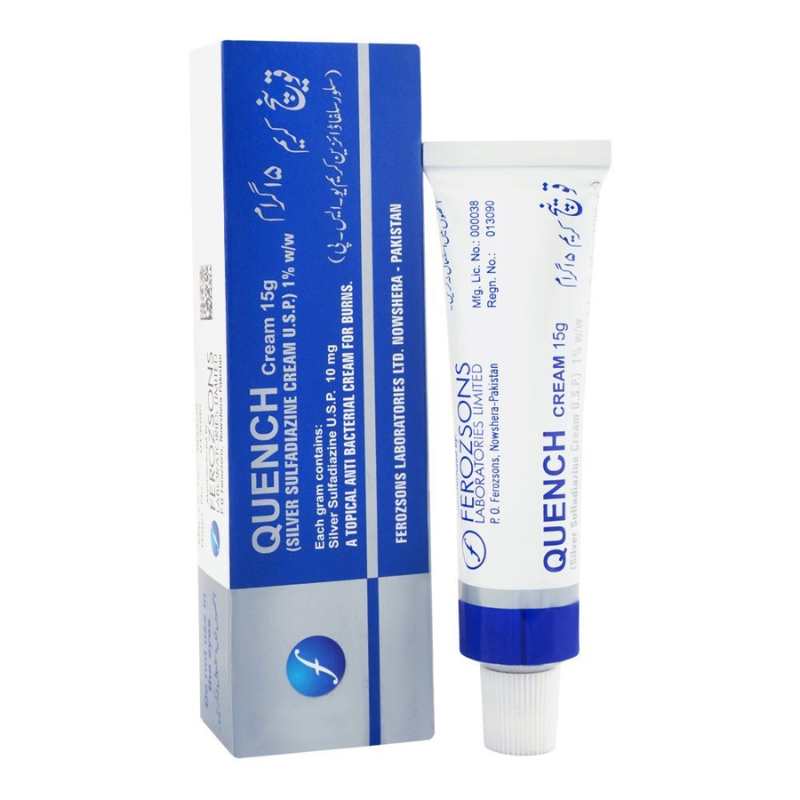
Quench Cream is a trusted topical antibacterial cream designed to prevent and treat infections in burns and other skin injuries. Recommended by physicians, it is commonly used in hospitals and at home for effective wound management. This cream is suitable for adults and children (with exceptions), providing a targeted approach to protect and heal damaged skin.
Composition / Ingredients
Quench Cream contains Silver Sulphadiazine, a potent antibacterial agent. Silver Sulphadiazine is known for its ability to fight bacterial infections on the skin while promoting healing of damaged tissue.
Key Ingredients and Benefits:
- Silver Sulphadiazine (1%) – Provides antibacterial protection by releasing silver ions that bind to bacterial DNA, inhibiting growth and multiplication of harmful bacteria.
- Peanut Oil – Acts as a moisturizing agent, helping the cream adhere to wounds and prevent drying. (Note: People allergic to peanut oil should avoid this cream.)
This composition makes Quench Cream effective for both prevention and treatment of infection in burns and skin injuries.
How It Works
The effectiveness of Quench Cream comes from the controlled release of silver ions. Once applied to a burn or wound, the silver ions penetrate the affected area, targeting bacteria without affecting healthy skin cells. This mechanism slows down bacterial growth and reduces the risk of infection.
The cream also creates a protective barrier over the wound, which keeps it clean and moist, promoting faster healing. Regular use as prescribed by a doctor ensures sustained protection and reduces complications from bacterial infections.
Uses / Indications
Quench Cream is mainly used for:
- Burns – To prevent infection in first-degree and second-degree burns.
- Skin Injuries – Such as cuts, abrasions, and ulcers that are prone to infection.
- Post-Surgical Wounds – Helps in reducing the risk of infection in minor surgical sites.
It is not recommended for infants under 2 months, people allergic to sulfonamides, or individuals with peanut oil allergy. Pregnant or breastfeeding women should consult a doctor before using Quench Cream.
Dosage & Administration
General Dosage Instructions:
- Apply a thin layer (3-5mm thick) directly to the affected area.
- For burns, apply daily or as advised by your physician.
- For ulcers or chronic wounds, change the dressing three times per week.
Important Notes:
- Avoid using on preterm infants and newborns.
- Follow the guidance of your doctor for children above 3 months.
- Always wash hands before and after application.
Professional supervision is recommended for prolonged use or large surface areas, as the cream can affect white blood cell count in rare cases.
Side Effects
Like all medications, Quench Cream may cause some side effects. These can be common, rare, or of unknown frequency.
Common Side Effects:
- Skin irritation, burning, or itching at the application site
- Rash or discomfort
Rare Side Effects:
- Severe allergic reactions such as Stevens Johnson syndrome or toxic epidermal necrolysis
- Decrease in white blood cell count (leukopenia)
- Grayish skin discoloration
Unknown Frequency:
- Hypersensitivity reactions or dermatitis
If you notice severe skin reactions or systemic symptoms, stop using the cream and contact your doctor immediately.
Precautions & Warnings
Quench Cream requires careful use under certain conditions:
- Drug Interactions: May interact with phenytoin, sulfonamides, oral hypoglycemics, or enzymatic debriding agents.
- Pregnancy & Breastfeeding: Consult your physician before use.
- Allergy Alerts: Avoid if allergic to sulfonamides or peanut oil.
- Special Conditions: Use caution in patients with G-6-PD deficiency, liver or kidney dysfunction.
Monitoring Recommendations:
- For prolonged treatment or application on large burn areas, regular monitoring of white blood cell count is advised.
- Be aware of potential superinfections after treatment, as local antimicrobials can sometimes alter bacterial balance.
Storage & Handling
- Store Quench Cream at room temperature, away from direct sunlight and heat sources.
- Keep out of reach of children.
- Do not use expired cream, and always close the tube tightly after use.
Proper storage ensures the cream remains effective and safe for use.
Benefits Compared to Other Burn Care Creams
Quench Cream stands out due to its antibacterial properties combined with moisturizing effects. Unlike simple burn ointments, Quench Cream actively fights infection while promoting tissue healing.
- Targeted antibacterial action – Silver ions prevent bacterial growth without harming healthy skin.
- Moisturizing barrier – Reduces drying of wounds and supports recovery.
- Widely recommended – Frequently used in hospitals and by physicians for both minor and moderate burns.
Buy Now
Protect your skin and prevent infection with Quench Cream 15 g by All Lab Tests. Available in pharmacies and online stores across Pakistan.
-
Easy to apply and safe under medical supervision
-
Effective for burns, ulcers, and skin injuries
-
Trusted by physicians for wound management
Buy Quench Cream Now from All Lab Tests to ensure prompt healing and prevent infection.
FAQs
Q1: What is Quench Cream used for?
Quench Cream is used to prevent and treat bacterial infections in burns, skin injuries, and ulcers.
Q2: Can children use Quench Cream?
Children above 3 months can use it under doctor supervision. It is not recommended for newborns or infants under 2 months.
Q3: How often should I apply Quench Cream?
For burns, apply daily or as instructed by your doctor. For ulcers, dressing changes are usually three times per week.
Q4: Are there side effects of Quench Cream?
Common side effects include skin irritation or rash. Rare side effects may include leukopenia or severe allergic reactions.
Q5: Can pregnant women use Quench Cream?
Consult a physician before using, as the cream contains silver sulfadiazine and may affect pregnancy in some cases.
Q6: How should Quench Cream be stored?
Store at room temperature, away from sunlight and heat, and keep it out of reach of children.
Q7: Can Quench Cream cause allergic reactions?
Yes, those allergic to sulfonamides or peanut oil should avoid this cream. Seek immediate medical advice if you experience severe skin reactions.
Reviews
There are no reviews yet.